Why did the median price per square foot for a Gulf Shores home fall 25 percent in the twelve months ending March 2026, while the median sale price for the town barely moved, down just 0.33 percent to $458,000 over the same stretch? Those two numbers should not be able to coexist. A price that holds steady while its per-square-foot value collapses usually means one thing: the market isn't moving as a single block. Something underneath the median is doing all the discounting, and something else is holding its ground.
In Gulf Shores, that something is the condo market.
The Number That Doesn't Match Itself
A flat median price sounds like stability. Zillow's home value index told a similar story as of April 2026, putting the typical Gulf Shores home at $452,086, down about 2 percent over the year, with homes going to pending in roughly 71 days. Two portals, two slightly different methodologies, one shared conclusion: prices are soft, but not collapsing.
Price per square foot is a different measurement, and it moves differently. It strips out the size of the home and asks what a buyer is actually paying for the space itself. When that number drops by a quarter while the median holds nearly flat, the explanation is almost never that every home in town got cheaper by the same amount. It's that a specific slice of inventory, one that skews toward smaller units and heavier price cuts, has grown large enough to pull the per-square-foot average down without dragging the median with it.
Days on market backs this up in an unexpected way. Homes in Gulf Shores sold in around 73 days as of March 2026, down from 103 days the year before. That's not a market where sellers are stuck waiting. It's a market where a meaningful share of sellers repriced aggressively enough to move faster, even at a lower per-square-foot number. Faster sales and falling per-square-foot value point to the same thing: sellers who adjusted, not a market that stalled.
Two Corners of Baldwin County, Two Different Markets
Baldwin County's own listing data for mid-2026 shows where that adjustment is concentrated. Inventory has climbed fastest in the county's resort corridor, the coastal condo and second-home stock in Gulf Shores and Orange Beach, while traditional single-family markets inland, in places like Daphne, Spanish Fort, and Foley, have stayed closer to flat or ticked slightly up. Resort averages have softened. Family-oriented markets have not moved nearly as much.
That split matters more in Gulf Shores than almost anywhere else in the county, because Gulf Shores itself contains both kinds of inventory. A buyer comparing a beachfront condo tower on Beach Boulevard to a single-family home a few blocks inland isn't comparing two prices in the same market. They're comparing a segment that's absorbing a real discount to one that's holding its value, and the town's median price blurs the two together into a number that describes neither very well.
Where the Real Cost Hides
The condo discount isn't happening because gulf-front living lost its appeal. It's happening because the cost of owning a coastal condo has gotten harder to predict, and buyers have started pricing that uncertainty into their offers.
A condo owner's insurance bill looks deceptively small on paper. The HO-6 policy, the one that covers a unit's interior, belongings, and liability, runs $650 to $1,100 a year for a Gulf Coast building, compared with $350 to $450 inland. That's the number most buyers see quoted. It is not the number that actually drives an association's budget.
The real cost sits inside the master policy, the insurance the HOA carries on the building's structure, roof, and common areas. That premium is one of the largest line items in a condo's operating budget, and buildings handle it differently. Some associations fold it into monthly dues. Others bill it as a separate annual assessment on top of dues, which keeps the regular bill looking stable while the real cost shows up once a year as a surprise. Alabama doesn't require an association to disclose which structure it uses, or whether its master policy is "bare walls in" (covering only the shell) versus "all in" (covering more of the interior), at closing. A buyer has to request that declarations page directly, and the difference between the two can mean needing $30,000 versus $60,000 in personal HO-6 coverage to fill the gap.
Reserve funding compounds the problem. Since the 2021 collapse of Champlain Towers South in Surfside, Florida, loss assessment claims have risen across the country as buildings face closer scrutiny of aging structural components. The standard default for loss assessment coverage on an HO-6 policy used to be $1,000. For older coastal buildings now, $50,000 or more is the common recommendation. None of this is unique to Alabama, but it has changed what a cautious buyer expects to see before making an offer on a resale tower, and buildings that can't produce clean answers are the ones absorbing the biggest discounts.
| What You're Insuring | Typical Annual Cost | What It Actually Covers |
|---|---|---|
| Condo HO-6 (interior only) | $650–$1,100 | Belongings, interior finishes, personal liability |
| Condo master policy | Folded into dues, or billed as a separate annual assessment | Roof, structure, common areas |
| Single-family home, full coverage | Around $4,159 on average in Gulf Shores | Structure, wind, liability (flood typically separate) |
Single-family homes don't carry this same split. One owner, one policy, one number a buyer can actually see in full before closing. That transparency is part of why the family-home segment hasn't needed the same discount to keep selling.
New Supply Keeps Landing in the Same Segment
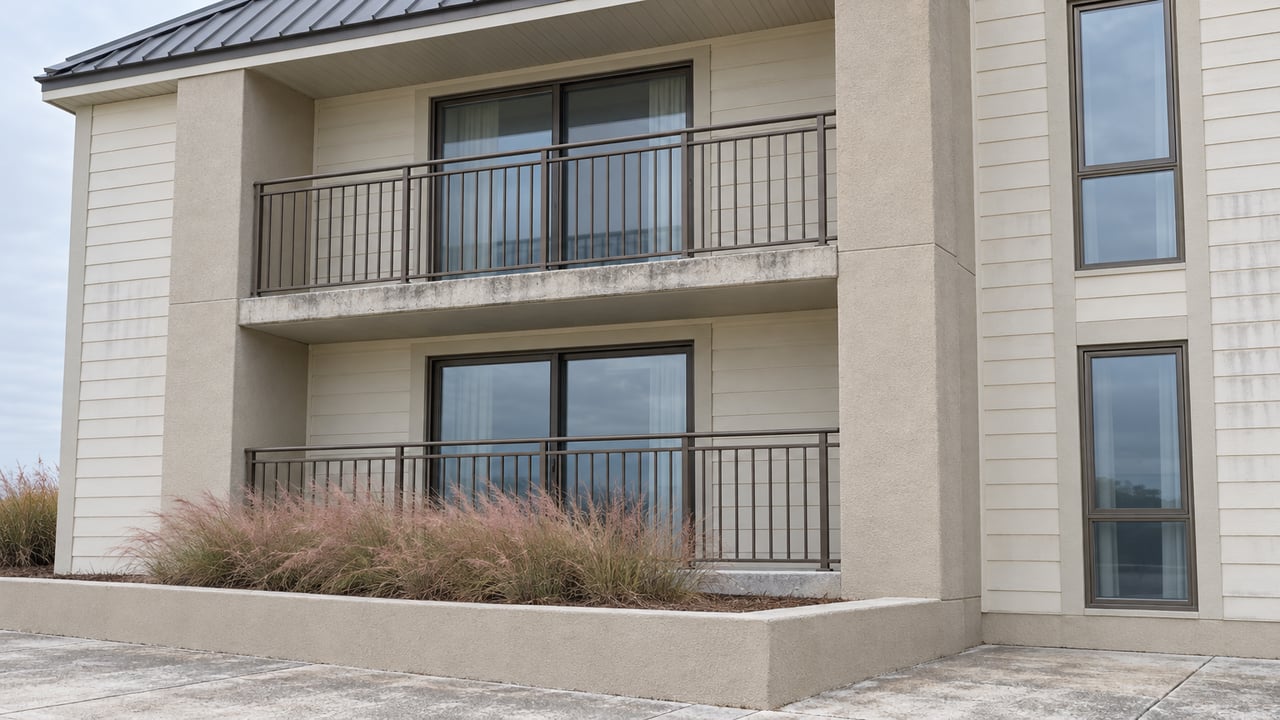
The condo segment isn't just absorbing discounts on existing inventory. It's also where new supply keeps arriving. Phoenix Gulf Shores II, a 22-story gulf-front tower with 80 three- and four-bedroom units at 533 East Beach Boulevard in the West Beach area, finished construction in the summer of 2025, joining a stretch of Beach Boulevard that already includes Island Royale, Gulfside Townhomes, and Oceania nearby.
Every finished unit in a new tower adds to the same pool of resale and rental competition that's already softening per-square-foot values. A buyer weighing a resale condo against a brand-new one on the same block isn't just comparing finishes. They're comparing a growing supply of similar units, which gives them real leverage to ask for concessions, a price adjustment, or clarity on the building's insurance structure before they sign anything.
What This Means Depending on What You're Buying
If you're shopping a gulf-front or bay-front condo, the discount is real, but it isn't uniform across every building. Ask for the current year's budget, the most recent CPA-prepared financials, and the reserve study before you write an offer. Ask specifically whether the master policy is bare walls in or all in, and whether insurance is folded into dues or billed as a separate assessment. Buildings that answer these questions cleanly are worth more than buildings that can't, even if their list prices look similar.
If you're shopping single-family, the leverage isn't as strong. Inventory in that segment hasn't built up the way it has along the beach, and prices have held closer to flat. Gulf State Park's more than 29 miles of paved trails and boardwalks connecting beaches, pine forest, and freshwater lakes sits inland from the condo corridor, and homes near that kind of amenity are competing in a market that simply hasn't loosened as much.
A Few Questions Worth Asking
Does a falling price per square foot mean every Gulf Shores condo is a good deal right now? No. The discount is concentrated in buildings with unclear insurance structures, underfunded reserves, or pending assessments. A building with clean financials and a recent reserve study may not be discounting at all.
How do I find out whether a specific building bills insurance separately from HOA dues? Request the estoppel or resale certificate, the current budget, and recent board meeting minutes before you write an offer. That paperwork will show whether insurance is part of monthly dues or billed as a separate line item, and whether any assessment is pending.
Is this pattern true everywhere in Baldwin County, or just here? It's concentrated in the county's resort corridor, Gulf Shores and Orange Beach specifically. Inland family markets have not shown the same buildup in inventory or the same per-square-foot decline.
If you're weighing a beachfront tower against a family home a few streets inland, the paperwork that actually separates a good deal from a slow-moving liability rarely shows up in the listing photos. Shannon King Jha can pull a building's master policy, reserve study, and assessment history before you make an offer, and walk you through what it actually means for your monthly cost. Request Your Home Valuation to see where your specific target sits inside Gulf Shores' two-speed market.